
Email frequency is one of those topics that sounds simple until you actually sit down to plan it.
Should you send once a week, twice a month or only when you have something important to say?
The truth is that there is no universal perfect number, because the right email frequency depends on your business, your audience, your offer, and the kind of relationship you want to build with your subscribers.
Some brands can send emails several times per week and still keep people engaged, but others would lose attention quickly if they tried the same thing. A fashion brand, a software company, a local service provider, and a B2B agency all communicate in different ways because their audiences have different expectations.
Start with your audience
Your audience should always shape your email frequency.
Think about what they need from you. Are they looking for quick product updates, educational tips, industry insights, special offers, reminders, inspiration, or expert advice?
An online store might send more often because customers expect promotions, new arrivals, seasonal offers, and product recommendations. A consulting business might send less often because its audience prefers deeper insights, case studies, and helpful advice.
A restaurant can send weekly updates about menus, events, and special offers. A dental clinic may only need a monthly newsletter with useful tips, reminders, and service highlights. A software company might send different types of emails to different users based on how active they are.
The point is not to copy another business, but to understand what your audience wants.
Match your frequency to your business type
Different businesses need different rhythms.
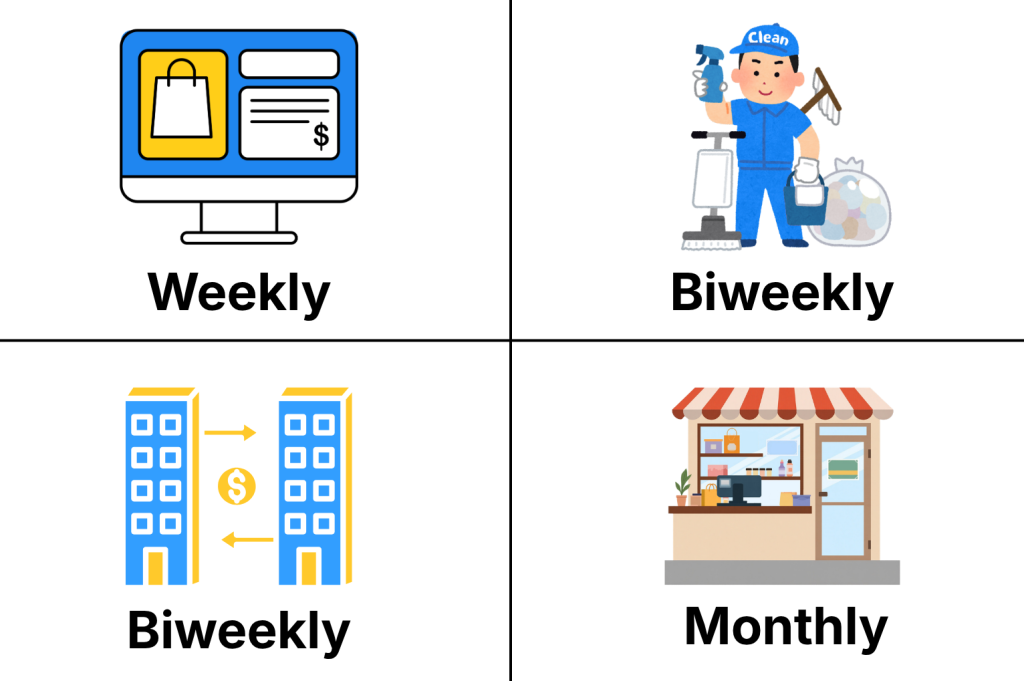
For ecommerce brands, email can be a high-frequency channel. Product launches, limited-time offers, abandoned cart emails, personalized recommendations, and seasonal campaigns all give the brand a reason to communicate more often.
For service-based businesses, email usually works better with a steady and thoughtful rhythm. A weekly or biweekly newsletter can help maintain trust, share expertise, and stay top of mind without overwhelming the reader.
For B2B companies, frequency often depends on the buying cycle. If the product or service requires a bigger decision, the emails should support education and trust-building over time. That could mean a weekly insight, a monthly report, or a carefully built nurture sequence.
For local businesses, consistency is often more important than volume. A simple monthly email can be enough to remind customers about services, offers, events, or seasonal needs.
Your business model gives you clues. If your audience buys often, you may have more reasons to send often. If your audience makes slower decisions, your emails should focus more on staying relevant over time.
Quality decides how often you can send
Frequency only works when the content is worth receiving.
Sending every week is great when each email gives the reader something valuable. Sending every week just to “stay active” can quickly make your emails feel empty.
Before choosing a schedule, look at what you can realistically create.
Can you produce one useful email per week? Can you share two strong updates per month? Do you have enough content, offers, tips, stories, or insights to support a regular rhythm?
A smaller but stronger newsletter plan is usually better than an ambitious schedule that becomes repetitive after a month.
This is where many businesses make email marketing harder than it needs to be. They decide to send too often, run out of ideas, and then stop completely. A simple rhythm that you can maintain for a long time is much more powerful.
Consistency beats intensity.
Example of creating your own frequency
Let’s say we run a shoe reselling business and we have an E-shop for it.
Now we have to figure out what kind of emails could we send and how much time and effort would we need for each of them.
- New shoes that drop every week
- Special promotions / 2 for 1 deals / End of the season discounts
Now, for weekly shoe drops we could have a simple template (1-time job) and just change the data each week and let’s say we run a special promotion once a month, that’s already 5 emails per month for a very small amount of work.
So at the base, just figure out all the different types of emails you could send and how much time is needed for each, then eliminate those that aren’t worth the time and that’s pretty much it.
Watch the signals from your subscribers
Your audience will usually tell you whether your frequency is working.
You just need to pay attention.
Open rates, click rates, unsubscribes, spam complaints, replies, purchases, bookings, and website visits all give you useful feedback.
If people are opening and clicking consistently, your rhythm is probably working. If engagement drops over several emails, your content or frequency may need adjustment. If unsubscribes increase after you start sending more often, that is a sign to review what changed.
But do not judge everything from one email.
One weaker subject line or one less exciting topic does not mean the whole strategy is wrong. Look for patterns over time. Email marketing becomes clearer when you study trends, so don’t focus on single results.
You can also ask your audience directly. A simple preference question can help:
“How often would you like to hear from us?”
Some subscribers may want weekly emails. Others may prefer monthly updates. Larger lists can even use preference centers, where people choose what types of emails they want to receive.
That gives the audience more control and helps your business send smarter emails.
Build a rhythm people can recognize
The best email frequency feels familiar.
Your audience does not need to know your full strategy, but they should get used to hearing from you in a certain way.
Maybe your newsletter arrives every Tuesday morning. Maybe your monthly update comes at the beginning of each month. Maybe your subscribers know that your Friday email always includes a useful tip, a short story, or a special offer.
This kind of rhythm makes your brand easier to remember.
It also makes email marketing easier for your team. You know when emails need to be prepared. You know what type of content is coming next. You can plan ahead instead of rushing every time you want to send something.
A clear rhythm helps both sides.